
Sense of unity
The team moves and acts as one. Team members feel part of something bigger than themselves, and the individual contributions fit together naturally.
Noticeable when you hear 'we' more often than 'I'.
Method
Every measurement in TeamInsights is based on the team flow model of Dr Jef van den Hout. The model is scientifically grounded and validated, and describes what a team needs to perform at its best together.
On this page we take you along: from the idea of flow, via team flow, to what exactly we measure and why.
In the demo we show how the model comes back in the questionnaire, the team report and the overview of all your teams.
Where it starts
You may know the feeling: you are so absorbed in your work that you lose track of time. A musician on stage, a programmer deep in a tricky problem, a runner for whom the miles seem to pass by themselves. That is called flow.
The Hungarian-American psychologist Mihaly Csikszentmihalyi studied this from the 1970s onwards. He spoke with artists, chess players and athletes who were completely absorbed in what they did. They described it as being carried by a current: attention is sharp, acting feels almost effortless and the sense of time fades into the background.
Flow feels good, but it is more than a pleasant experience. In many studies flow is linked to better performance, more engagement, creativity and wellbeing.

Flow does not arise from easy tasks. An experienced pianist who plays a nursery rhyme every day gets bored. A beginner asked to play a Rachmaninov concerto after two lessons gets anxious. Flow lies in between: the challenge is high, and your skills just about match it.
Clear goals and direct feedback help too. A climber feels with every grip whether it holds. At work this is less natural: goals can be vague and results only show late. But it can be organised.
The step to the team
For a long time flow was seen as something individual. But people rarely work alone. That raised a new question: can a team as a whole get into flow?
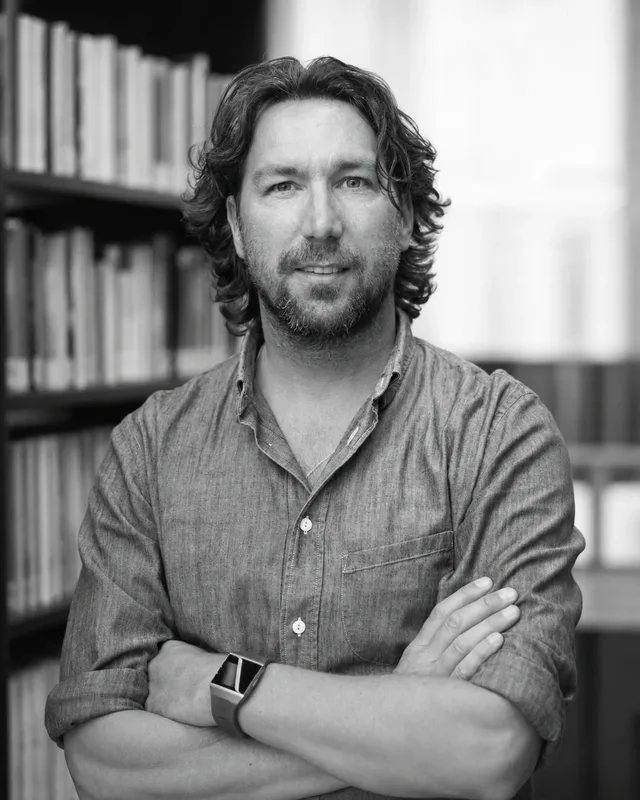
Dr Jef van den Hout, affiliated with Eindhoven University of Technology, wrote his PhD on exactly that question. Together with Orin Davis and others he developed team flow into a model, described it in scientific publications and developed a validated questionnaire to measure it.
Team flow is more than four colleagues who happen to be focused at the same time. In team flow, contributions interlock. Think of an orchestra: every musician plays their own part on their own instrument, and the music only arises from the interplay.
Team flow does not mean everyone always agrees. It means a team can use its differences without losing its holistic focus, trust and unity.
This turns team flow from a great experience into something you can measure and strengthen deliberately. That is exactly what TeamInsights does.
The team flow model describes what that shared experience is made of: seven prerequisites that make team flow possible and four characteristics by which you recognise it. These are the eleven elements on which every TeamInsights measurement is built.
The building blocks that make team flow possible; this is where the influence lies.
The recognisable signals that a team is in flow. The effect, not the cause.
Good to know: team flow is not a constant. The experience fluctuates; even strong teams are not in flow all the time. That is exactly why regular measurement is so valuable.
You cannot order a team to trust each other or to feel as one. These characteristics only arise when the underlying prerequisites are in order. What you can do: build purposefully on the prerequisites that lag behind. That is where most movement comes from.
That is why we measure both. The characteristics tell how the team experiences the collaboration right now; the prerequisites tell what you can work on to strengthen that experience.
Three examples from the questionnaire
Within our team...“We all feel safe to take risks.”
Within our team...“We give each other feedback whenever we can.”
Within our team...“Personal goals are compatible with those of the team.”
Team members rate the statements. Results are shown only at team level, without individual scores, profiles or labels.
Team flow is the moment when all team members simultaneously experience flow in their interdependent tasks, and feel that the team as a whole is in flow. The chance of that is greatest when all seven prerequisites are present. Open a prerequisite for the explanation and the signals by which you recognise it.
Collective ambition grows from team members' reasons to work together, their shared values and the recognition of each other's complementary skills. It is the starting point of team formation and the basis of a shared identity: the reason someone truly feels part of this team. That is why it is the fundamental prerequisite. And it works both ways: a team that experiences flow together wants to experience it again, which makes the ambition grow further.
Where collective ambition is the 'why', the common goal makes it concrete: what do we want to achieve, and when? A rowing team may share drive and solidarity as its ambition, and an Olympic medal as its goal. The more challenging the goal, the better the performance, as long as the team is committed to it, has the means and the goal remains achievable.
Team flow happens at individual and team level at the same time. Personal goals therefore need to fit the team goal and each other: conflicting goals pull a team apart. When team members help shape the team goal and translate it into their own contribution, motivation and performance grow. That way everyone knows how their own work contributes to the whole.
Flow arises from a good balance between challenge and skill. A team is given a task precisely because it is too big or too complex for one person. So it comes down to joining forces: dividing tasks so that every team member is challenged at their own level, while the contributions form one whole. Who can do what, where does someone excel, and how do we bring that together?
Clear and timely feedback is one of the strongest drivers of flow. In a team it must be clear at any moment who does what, how someone is doing and how the team as a whole is doing. That requires feedback on your own task, the shared task and the collaboration itself. Teams with open communication truly listen to each other and respond to what they hear. That lets them respond with agility to the unexpected.
A challenging goal means failure is always possible. In a safe environment team members dare to take on that challenge anyway, without fear of failing or of being judged. Unnecessary risks are removed, but mistakes are part of it: they are a chance to learn. Anyone who risks ridicule or punishment stays within their comfort zone and so does not contribute to team flow.
Team members jointly take responsibility for reaching the common goal with dedication. They keep each other on track, keep distractions out and hold each other to agreements. The result is a focused dynamic in which everyone keeps both their own task and its connection with the work of others in view.
Want to read more about the prerequisites, with examples from practice? Read the article on teampacer.nl on the seven prerequisites for team flow
The characteristics are the effect, not the cause. You cannot build on them directly, but they do show whether a team is in flow, and whether work on the prerequisites is having an effect. That is why we measure them too.
The team moves and acts as one. Team members feel part of something bigger than themselves, and the individual contributions fit together naturally.
Noticeable when you hear 'we' more often than 'I'.
Team members can count on each other, without checking or caution. They know everyone delivers their part, which lets them give each other room and take risks together.
Noticeable when work is let go of once it has been handed over.
The team experiences moving forward together. There is momentum: every step brings the goal closer, and successes feel like shared successes. That gives energy to keep going.
Noticeable when the team itself can name what it has achieved together recently.
Everyone is fully concentrated on the shared task and at the same time sees how their own work fits into the whole. Distractions fade into the background and time seems to fly.
Noticeable when meetings are about the goal, not side issues.
How TeamInsights uses the model
The Quick Scan gives a first picture with 11 statements, one per element. The extended questionnaire goes deeper into every prerequisite and characteristic with 37 statements.
Team members complete the questionnaire; the platform shows team averages and the spread within the team. Individual answers are not visible anywhere.
By measuring again after a few months, you see per element what changes. That shows whether the work on the prerequisites has an effect, per team and across all your teams.
Also read the article series on team flow at teampacer.nl: From flow to TeamFlow.
TeamFlow® and Flow Concepts® are registered trademarks. TeamInsights applies this theory and the related measurement instruments in consultation with and with permission of the rights holder.
In a thirty-minute demo we walk through the measurement, the team report and the development over time, tailored to your situation.
Book a demoOnline, with examples based on fictional teams. No mandatory facilitation.